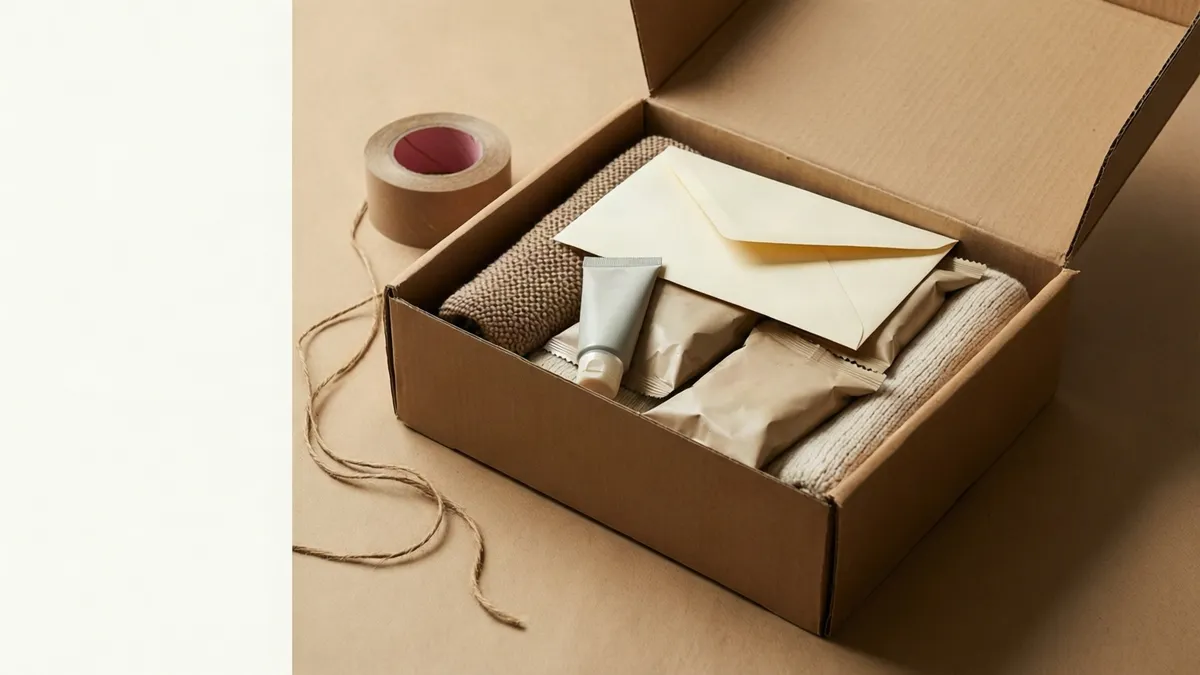
In short: There is no universal care package. The situation sets the rules — mobility, diet, shipping, unit policy, and budget — and every item has to pass those rules before it earns a place in the box. Start by asking what your recipient can actually use, then work through the situation-specific lists below.
We write buying guides, not product reviews. We have not used every item on this page, and specs come from the manufacturer or listing. Whatever Amazon shows when you click is the authoritative figure for price, availability, and ratings.
This article contains affiliate links. If you buy through one, we earn a small commission at no extra cost to you. We only recommend what we would suggest to a friend.
The Federal Trade Commission's endorsement guides, 16 CFR Part 255, require a disclosure like that one to be difficult to miss, so it sits above every link here. Our full affiliate disclosure has the rest.
A care package is a parcel before it is a gesture. The box has to clear customs, a hospital unit, a dorm mailroom, or a military sorting facility before anyone opens it. If you start with the shopping list, you are solving the wrong problem first. Our Care Package Ideas That Survive the Trip lays out the full framework; this page breaks it down by situation.
The thesis is simple. Any item that needs two hands, a fridge, a special diet, or a shipping exception does not belong in the box. The right box subtracts work from a hard month. It does not add stuff.
Start with the situation, not the stuff
Before you choose a single item, name the constraint. Is your friend in a hospital bed with one working arm? Is your sister two weeks postpartum and cooking one-handed? Is your kid in a dorm with no car and a meal plan that closes at 7 p.m.?
Each of those situations has a different rulebook. A hospital unit restricts fresh flowers, latex balloons, and outside food in many cases. A dorm limits package size and storage. A military APO/FPO address has customs rules and climate hazards. What Is a Care Package? Definition, History, and Rules covers the basics if you are starting from scratch.
Ask before you shop. If you do not know what your recipient can eat, touch, or store, ask them or someone close. A text to a spouse, a roommate, or a charge nurse saves you from sending something that gets thrown out.
The decision checklist below is our suggested version. Copy it, fill it in, and let it drive the shopping list.
Situation checklist (fill in before you shop):
- Where is the box going? (home, hospital, dorm, APO/FPO, international)
- What can the recipient open and use with one hand? 3. Does anything need refrigeration or assembly? If yes, cut it. 4. What dietary, allergy, or scent restrictions apply? 5. What does the destination's own policy page say about mail? 6. What is your budget, and how often do you plan to send?
After surgery or a hospital stay: ask the unit, then pack
The hospital unit is the first gate. Many units restrict fresh flowers, latex balloons, and outside food. The unit's own policy is the one that counts, so call the nurses' station or check the hospital's visitor information page before you buy anything.
Once you know what is allowed, pack for one-handed use. Your friend who is three days post-op cannot unwrap plastic clamshells, open a jar, or reach a shelf. Choose items that tear open, peel, or twist. Individually wrapped snacks, lip balm in a tube, and unscented lotion all pass the one-hand test.
Shelf-stable matters. A hospital room has no fridge for your use, and a shared break-room refrigerator is not reliable. Skip anything that needs cold storage within hours. Granola bars, crackers, trail mix, and single-serve nut butters are safe bets.
A personal note is the part that gets kept. Two sentences on a card outlast every snack in the box. If you want to go deeper on the specifics, our Post Surgery Care Package: What to Send and Skip walks through the full list.
Postpartum: what a new parent actually needs
A new parent is not resting. They are feeding a newborn every two to three hours, running on broken sleep, and doing most of it one-handed. The box has to match that reality.
No prep. No assembly. No trip to the kitchen. That rules out anything requiring a bowl, a spoon from a drawer, or hot water from a stove. Shelf-stable snacks that can be eaten at 3 a.m. from a rocking chair are the gold standard. Lactation cookies, protein bars, dried fruit, and trail mix all qualify.
Self-care items have to be usable without a bath. Bath bombs are lovely in theory, but a six-week-postpartum parent is not drawing a bath. Lip balm, unscented hand lotion, and dry shampoo are things that work from a nightstand. Postpartum Care Package Ideas New Moms Actually Use has the full breakdown.
Socks. Plain, gripped, nonslip socks. Hospital floors are cold, and the pair they send you home in is thin. A pack of nonslip socks is the most practical thing in the box, and it is the item most people skip in favor of something cuter.
College student care packages: work within the dorm
A dorm room is a shared space with no pantry and a meal plan that closes early. Your kid has a mini-fridge, a microwave they share with forty people, and one shelf. Pack for that.
Shelf-stable snacks are the core. Microwave popcorn, instant ramen, granola bars, and single-serve nut butters all store flat and need no refrigeration. Coffee and tea make sense here because the dining hall coffee is bad and the coffee maker is communal. Send individual coffee packets or tea bags that brew in a mug.
Check the mailroom. Campus mail pages list package size limits, pickup hours, and whether the mailroom holds packages over break. A box that arrives on Friday at 5 p.m. and sits unclaimed until Monday is a box that sits in a loading dock.
Dietary restrictions are real on a campus. If your student is vegan, gluten-free, or allergic to nuts, read every label. What to Put in a Care Package (and What to Leave Out) covers the label-reading basics.
A gift card to a delivery service or a nearby coffee shop is not a cop-out. It is the item a broke college student will use the fastest.
When someone is grieving or divorcing, send food and errands
Grief and divorce share a logistics problem. The person is behind on laundry, behind on groceries, and behind on phone calls. They do not need a keepsake. They need the boring parts of life handled.
Send food that requires zero decisions. A meal-delivery gift card, a pantry meal kit, or a box of shelf-stable snacks means they do not have to think about dinner. Skip sympathy objects — the engraved picture frame, the wind chime, the "thinking of you" throw pillow. Those items arrive with emotional weight attached and no instruction manual.
Practical items beat sentiment here. A prepaid laundry card, a house-cleaning gift certificate, or groceries delivered to the door subtract a chore from a week that has too many. If you are sending a physical box, fill it with things that run out: coffee, tea, crackers, soup mix, and plain socks.
If someone is in hospice, the same rules apply with a tighter filter. Ask the hospice nurse or the family caregiver what is allowed in the room. Scented items are often refused. Fresh food may not be stored. The note is the item that matters most.
The edge cases: elderly parents, food allergies, eco-friendly, and international shipping
Elderly parents and grandparents
Arthritis changes the packaging test. If your parent cannot open a screw-top jar or a shrink-wrapped box, the item fails. Choose tear-notches, peel lids, and easy-open packaging. Large-print puzzles, unscented hand lotion, and soft socks all pass. Skip anything that requires a phone app to set up.
Food allergies and dietary restrictions
Read every label, every time. Manufacturers change facilities and reformulate without warning. If your recipient has a nut allergy, look for the "may contain" line, not just the ingredient list. For celiac or gluten-free, look for a certified label, not just the absence of wheat. When in doubt, send something that is not food — socks, a notebook, tea that is labeled allergen-free.
Eco-friendly and sustainable choices
Reusable packaging, minimal plastic, and compostable wrapping matter if your recipient cares about them. But do not send a box of packing peanuts to someone who will feel guilty throwing them away. Choose items in recyclable paper, skip the bubble wrap, and fill the box with something usable — a tea towel, a bandana, a reusable bag — instead of filler.
International shipping (non-military)
Customs forms are mandatory. You will fill out a PS Form 2976-R, the customs declaration, for any international parcel. Check the destination country's prohibited list before you shop — chocolate with alcohol filling is banned in some countries, and cosmetics restrictions vary. How to Ship a Care Package: USPS Rules You Must Check walks through the customs process step by step.
For military destinations, the rules are stricter. USPS redefined military mail restrictions B, I, I1, and I2 effective April 2, 2026, per the United States Postal Service, 2026. Packages sent to DPO locations cannot exceed 27 x 14 x 14 inches. Desert temperatures on military mail routes can exceed 100 degrees Fahrenheit and damage delicate goods like electronics, according to USPS military mail guidance.
Hemp products are a specific trap. Hemp with THC content of 0.3 percent or less can be mailed domestically but not to military destinations, per USPS shipping restrictions. If you are sending a "relaxation" box with CBD lotion or hemp snacks to an APO/FPO address, cut it.
USPS adds a $7.50 HAZMAT handling fee for Priority Mail and Priority Mail Express packages containing hazardous materials, per USPS shipping restrictions. Aerosols, lithium batteries, and certain perfumes trigger this fee — and some are nonmailable entirely.
How much to spend and how often: the budget table
Price bands below are ours, not a sourced figure. They reflect what we have seen across common care package situations and what each band realistically buys.
| Budget band | What it buys | Fits best | Trade-off |
|---|---|---|---|
| Under $30 | Snacks, a note, one small practical item (socks, lip balm, tea) | College students, quick pick-me-ups, repeat sends | More items but all consumable; nothing durable survives the month |
| $30 to $60 | A themed snack box plus one self-care or practical item, or a small gift card | Postpartum, grief, get-well, one-time sends | Balances quantity with one thing that lasts; still no premium items |
| $60 to $100 | A durable item (blanket, electric kettle) plus snacks and a note, or a larger gift card | Surgery recovery, major life events, military sends | One strong item carries the box; snack variety drops |
Our take: The $30 to $60 band is where most care packages should live. Under $30 feels thin for a hard month, and over $60 risks sending something the recipient has to store, return, or feel guilty about. The exception is military APO/FPO sends, where a larger flat-rate box packed dense with snacks justifies the higher spend because shipping is flat-rate and the trip is long. Our call: spend on consumables and one practical item, and let the note carry the rest.
How often you send matters more than how much you spend. A $25 box every two weeks for a semester beats one $100 box in September. Frequency signals that you are still thinking about them, which is the part that lands.
The things people send that nobody wants
Scented candles in a hospital. The unit policy probably bans open flames, and the smell reaches the next bed.
Fresh food that needs a fridge. It will sit in a nurses' station for six hours and get thrown out.
A blanket for someone in a hospital bed. They already have hospital blankets, and they have no place to store a second one.
Chocolate in a summer military box. Desert routes can exceed 100 degrees Fahrenheit, and your truffles arrive as soup.
A mug. A teacher gets thirty a year. Your friend in a hospital has no shelf.
A sympathy throw pillow. It arrives with grief printed on it and no way to return it.
The pattern is the same in every case. The item failed the constraint test. It needed a shelf, a fridge, a policy exception, or a climate that does not exist. The right box subtracts work. The wrong box adds a chore.
Frequently asked questions
How much should I budget for a care package?
Most care packages land between $30 and $60, which buys a themed snack box plus one practical item. Under $30 works for quick repeat sends to a college student; over $60 makes sense for surgery recovery or a military APO/FPO send where flat-rate shipping rewards a fuller box.
What are good care package ideas for elderly parents or grandparents?
Focus on easy-open packaging, large-print items, and things that do not require a phone. Unscented hand lotion, soft grip socks, tea bags with tear-notches, and a handwritten note in large writing all pass the arthritis test. Skip screw-top jars, shrink-wrapped boxes, and anything scented.
How often should I send care packages?
For a semester-long college send, every two to three weeks keeps a steady signal without overwhelming the mailroom. For grief or postpartum, one box in the first week and a follow-up two to three weeks later catches them when the initial wave of help has faded. For military sends, align with the flat-rate shipping cycle — monthly is common.
What are good care package ideas for someone going through a breakup or divorce?
Send food that requires zero decisions and practical items that subtract a chore. A meal-delivery gift card, a box of shelf-stable snacks, plain socks, and coffee or tea bags all work. Skip keepsakes, framed photos, and anything that arrives with emotional weight attached.
How do I make a care package for someone with food allergies?
Read the full label, including the "may contain" line, not just the ingredient list. For celiac disease, look for a certified gluten-free label. When in doubt, send a non-food item — socks, a notebook, tea labeled allergen-free, or a gift card to a restaurant that accommodates their diet.
What are eco-friendly or sustainable care package ideas?
Choose recyclable paper packaging over bubble wrap, and fill the box with something usable — a tea towel, bandana, or reusable bag — instead of packing peanuts. Select items in minimal, compostable wrapping. Avoid sending eco-branded items the recipient will feel guilty discarding; pick things they will actually use up.
How do I ship a care package internationally (non-military)?
Fill out PS Form 2976-R, the customs declaration, for every international parcel. Check the destination country's prohibited list before you shop, since chocolate with alcohol filling and certain cosmetics are banned in some countries. Use Priority Mail International for tracking, and declare the full contents honestly on the form.
Hannah Ruiz writes buying guides, not reviews; nothing here was tested by us.
Sources
- United States Postal Service — "Military Mail" (https://about.usps.com/postal-bulletin/2026/pb22699/html/info_003.htm) Retrieved 2026-08-24.
- United States Postal Service — "Military & Diplomatic Mail | USPS" (https://www.usps.com/ship/apo-fpo-dpo.htm) Retrieved 2026-08-24.
- United States Postal Service — "Shipping Restrictions & HAZMAT - What Can You Send in the Mail? | USPS" (https://www.usps.com/ship/shipping-restrictions.htm) Retrieved 2026-08-24.
- Federal Trade Commission — "Guides Concerning the Use of Endorsements and Testimonials in Advertising" (https://www.ftc.gov/legal-library/browse/federal-register-notices/guides-concerning-use-endorsements-testimonials-advertising) Retrieved 2026-08-24.