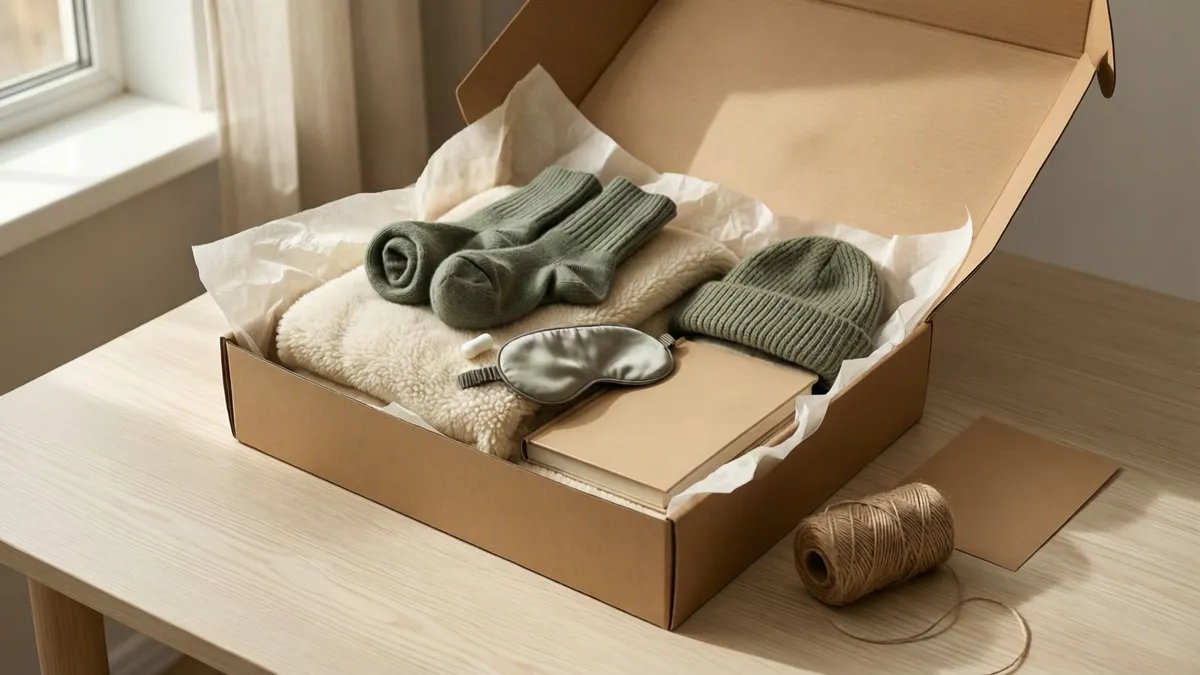
In short: split every idea into two piles. Pile one touches nothing internal — a blanket, warm socks, a soft hat, an eye mask, a puzzle book — and you can mail it this week. Pile two is anything taken by mouth or put on skin: teas, ginger chews, lotions, supplements. Those go in a text to the treatment team before they go in a box. This is because the Food and Drug Administration (FDA) notes that dietary supplements are not reviewed for safety before they are sold.
We write buying guides, not reviews: we have not used every item on this page, and specs come from the manufacturer or the listing. Whatever Amazon shows when you click is the authoritative figure.
This article contains affiliate links. If you buy through one, we earn a small commission at no extra cost to you. We only recommend what we would suggest to a friend.
The Federal Trade Commission's endorsement guides, 16 CFR Part 255, require a disclosure like that one to be difficult to miss, so it sits above every link here. Our full affiliate disclosure has the rest.
Treatment is the one destination where the shopping list is not really yours. An infusion day, a rough week at home, a low-count stretch: each changes what belongs in the box. Our general care package ideas guide covers the trip itself. This page covers the question almost nobody answers before buying: which items need a green light first.
What we measured: We read the 12 ranking pages for this search in full and compared what each one tells you to buy. Seven of the 12 list warm layers and blankets, and seven also push unscented lotion without asking who clears it. Prices quoted across those guides run from about $2 to $2,600, with a median near $180. Treat that spread with caution: the numbers come from guides, not live listings, and we pulled them in one day.
Care package ideas for a chemo patient, split into two piles
Some items are just things. A fleece throw blanket, warm socks, a sleep mask, a puzzle book — none of it enters the body, so none of it needs permission. Mail pile one this week.
Everything else is a question. Ginger chews, herbal tea, lozenges, hand lotion, essential oils: taken by mouth or put on skin, they land in pile two. The question travels by text, not by parcel.
The National Cancer Institute's 2022 guidance on skin and nail changes tells people in treatment to avoid skin products listing alcohol or fragrance. They should also ask their nurse to recommend specific products. That one sentence sorts half a drugstore aisle for you.
Our suggested sequence:
- Text before you shop, so nothing in the cart waits on an answer.
- Claim one category if other friends are sending too.
- Fill pile one deep: blanket, socks, hat, eye mask, puzzle.
- Turn pile two into the same text instead of the same box.
- Read every label: fragrance and alcohol stay out.
- Put the handwritten note on top, where it gets found first.
Here is our suggested wording for that text: "Hi, this is [your name]. I'm packing a small box for [friend] this week. Could you tell me whether ginger candy, herbal tea, and unscented lotion are okay, or should those wait? No rush either way — the blanket's already bought."
Every item fits a price band, and the bands are not the same gift
Money is not the decision. Sturdiness is. Around $30 fills a good box, and spending past that should buy fewer, better things, not more items. A flimsy version of a pile-one item gets replaced; a sturdy one gets used for months.
Price bands below are ours, not a sourced figure.
| Item | Price band (ours) | Pile | Team clearance? | Work it adds |
|---|---|---|---|---|
| Soft blanket or wrap | under $30 | Mail now | No | None |
| Warm socks or slippers | under $30 | Mail now | No | None |
| Soft hat or scarf | under $30 | Mail now | No | None |
| Eye mask and ear plugs | under $30 | Mail now | No | None |
| Puzzle book or e-reader | under $30 / over $75 | Mail now | No | None |
| Unscented hand lotion | under $30 | Ask first | Yes | One email to the nurse |
| Ginger candy or herbal tea | under $30 | Ask first | Yes | One email to the nurse |
| Hard candy or lozenges | under $30 | Ask first | Yes | One email to the nurse |
| Soft-bristle toothbrush, mild rinse | under $30 | Ask first | Yes | One email to the nurse |
Read one more label before adding a rice pack or gel wrap. If your friend is also having radiation, the same NCI page says not to use heating pads or ice packs on the treatment area. That classic fill item stays out until someone confirms.
Our take: build pile one deep and buy the sturdy version of exactly two things, a blanket and a hat, then stop. Everything else in the box should cost pocket change, because the pile-two items are a question, not a purchase. If our answer had to be one line: a text to the nurse is worth more than any tea you can ship.
The same box for a man, a kid, or the fourth sender
Adjust pile one to the person, not the diagnosis. For a man, that usually means a plain beanie instead of a pastel head wrap. For a kid, the parent is the gatekeeper, so the pile-two question goes to the parent and the team together.
The hat earns its spot twice over. The NCI, 2022, outdoor list includes a wide-brim hat and sun-protective lip balm, so a good hat covers a sensitive scalp and a sunny parking lot.
Fourth sender? Claim the unclaimed job. Socks and blankets go fast; gas cards, a meal-delivery gift card, and a journal for tracking questions sit on the shelf longer. Duplicate nothing: one group text, one claim per person.
Sometimes the best move is not sending a box
Ask what the week needs. Often the answer is dinner, a ride to infusion, an hour of childcare, or the litter box, none of which ships well. A box that adds a thank-you-note obligation has made work, and work is the thing we are trying to remove.
If you are far away, spend on help instead of stuff: a grocery credit, a cleaning session, gas money. Then send the note anyway. The same split-pile logic runs through our post-surgery care package guide, and the packing mechanics live in how to make a care package.
Cancer nonprofits also run free package programs; many ask the patient or caregiver to request directly, often with a wait. If you want the full leave-it-out logic, what to put in a care package covers it.
How much should you spend on a chemo care package?
Two or three sturdy pile-one items plus pocket-change fillers covers it. The bands in our table are our own judgment, not a sourced number. Past roughly $75, you are buying more items when you should be buying one better thing.
Which items could interact with chemotherapy?
Herbal teas, concentrated ginger, any supplement, and essential oils applied to skin are the usual suspects. The safety review you assume at a drugstore often does not exist for supplements, which is why the team holding the medication list answers this, not a shopping page.
How do I avoid duplicating what other friends send?
One group text, one claimed category per sender. Cozy items get claimed within hours, so volunteer for the boring job: gas card, journal, or the snacks the team approves.
Could a care package ever be unwelcome?
Yes. Ribbon merchandise turns a person into a diagnosis, and coloring books can read as childish to a grown adult; we leave both out of every suggestion we make. A plain card beats anything themed.
Are there programs that send chemo care packages for free?
Several cancer nonprofits will, and most run on a request form the patient or caregiver submits, often with a waitlist. Order one if it helps, but the handwritten note still has to come from you.
Hannah Ruiz writes buying guides, not reviews; nothing on this page was tested by us.
Sources
- National Cancer Institute — "Skin and Nail Changes during Cancer Treatment" (https://www.cancer.gov/about-cancer/treatment/side-effects/skin-nail-changes) "Retrieved 2026-09-29".
- Federal Trade Commission — "Guides Concerning the Use of Endorsements and Testimonials in Advertising" (https://www.ftc.gov/legal-library/browse/federal-register-notices/guides-concerning-use-endorsements-testimonials-advertising) "Retrieved 2026-09-29".